
Serendip is an independent site partnering with faculty at multiple colleges and universities around the world. Happy exploring!

Nam June Paik
 Nam June Paik used technology as an art form, and has often been called the godfather/grandfather/George Washington of video art.
One of his exhibits was made of 52 TVs that were each covered by an aquarium filled with water and fish that swam around in front of what was appearing on the TVs. Another piece he did was "TV Buddha," in which a sculpture of a seated Bhudda who watched humself on a closed circuit television.
For more infomation, go to: http://articles.latimes.com/2006/jan/31/local/me-paik31

The guy and his cambell's cans.
Andy Warhol is known for taking play to the next level. He loved being bold and distinct and making his thoughts visual. His art represented his playfulness with the media and his choice of colors. Some of his art became contradicting, but to him it just meant being free and letting his take be known and that people were paying attention to his art and acknowledging it.


Innovating Pedagogy 2013: Learning from gaming
 The Innovating Pedagogy report is an annual overview of edutech from the Institute of Educational Technology at the Open University. The 2013 report, the second in the series, selects 10 emerging innovations from the long list of existing technologies which the institute believes have the potential to make a significant impact on education. These are not technologies which are in development or even new, but rather technologies and ideas which are already being effected but have room to expand. The report ranks each innovation in terms of potential impact and timescale for implementation, describes its current application, and then explains the pedagogy behind the innovation and how it could be re-envisioned for maximum impact. The next innovation the report describes is learning from gaming.
Potential impact: high
Timescale: medium

Ten Minutes on Giacomo Balla
Giacomo Balla was a futurist painter who lived from 1897-1958. The futurist movement was one based on, frankly, movement, and the idea that paintings culd be more than static images. He and his contemporaries tried to express velocity in an object by using planes of color to realistically or abstractly create a work that was more than a still life. It was a very progressive movement that gave birth to thousands of painting and sculptures that challenged the idea that a motionless canvas must contain a motionless subject.

The Dynamism of a Dog on a Leash
http://uploads8.wikipaintings.org/images/giacomo-balla/dynamism-of-a-dog-on-a-leash-1912.jpg

The Street Light—Study of Light
http://uploads1.wikipaintings.org/images/giacomo-balla/street-light-1909.jpg
http://www.britannica.com/EBchecked/topic/50455/Giacomo-Balla
http://www.guggenheim.org/new-york/collections/collection-online/artists/bios/862
Innovating Pedagogy 2013: Geo-learning
The Innovating Pedagogy report is an annual overview of edutech from the Institute of Educational Technology at the Open University. The 2013 report, the second in the series, selects 10 emerging innovations from the long list of existing technologies which the institute believes have the potential to make a significant impact on education. These are not technologies which are in development or even new, but rather technologies and ideas which are already being effected but have room to expand. The report ranks each innovation in terms of potential impact and timescale for implementation, describes its current application, and then explains the pedagogy behind the innovation and how it could be re-envisioned for maximum impact. One of the innovations described is geo-learning.


Exquisite Corpse
The exquisite corpse was a parlor game in which people would work together to write a story. There were several versions of exquisite corpse each of which having different rules; for some, each person would write one word and then fold the paper so that the next person could not see the word they wrote. In other games, people would write lines, and cover half of the line before the next person began writing. The surrealist movement eventually adopted the exquisite corpse game. Surrealists worked together to create pieces of art that they believed were exploring the subconscious and collective unconscious.
On another note, I watched the movie "The Exquisite Corpse Project." It was much longer than the ten minutes we were supposed to spend doing research so I won't write about it. Check out the trailer if this sounds interesting to you, and if you watch the movie, I'd love to chat about it.
information: http://exquisitecorpse.com/definition/About.html
http://www.moma.org/visit/calendar/exhibitions/1256
image: http://www.moma.org/visit/calendar/exhibitions/1256


since you're all thinking about self-representation this week
...i thought you might be interested in (inspired/put off by?) this
animated version of Janis Joplan's final interview, on creativity and rejection....

Remote Ready Biology Learning Activities
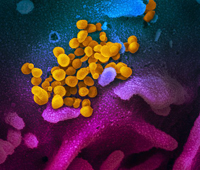
Remote Ready Biology Learning Activities has 50 remote-ready activities, which work for either your classroom or remote teaching.
What's New? Subscribe to Serendip Studio
A Random Walk
New Topics
-
4 days 17 hours ago
-
4 days 17 hours ago
-
4 days 17 hours ago
-
4 days 17 hours ago
-
1 week 16 hours ago
