
Serendip is an independent site partnering with faculty at multiple colleges and universities around the world. Happy exploring!

Thoughts on Meaning and Reading
Our discussion of information and meaning related to what I have been discussing in my social theory class. We have been reading the work of the early 20th century social psychologist Hebert Mead who posits “meaning arises and lies within the field of the relation between the gesture of a given human organism and the subsequent behavior of this organism as indicated to another human organism by that gesture.”[1]For Mead a gesture, or to put it in terms of our class a certain code, only takes on meaning when the person to whom the gesture was directed responds in an anticipated manner.

Hyper reading
From the conversation we've had in class, I think that we are primed to hyper read, we are always in search for a "sign" to lead us to the right direction. Therefore, when we use hyper reading, we are in constant search for a key word to help us get to the main point we're looking for. From my personal experience, hyper reading has turned to something I automatically behave like, when looking through notes i took for a class, I always wish there was a way to type i the key word i'm looking for to make it easier and faster to find the information desired. Hyper reading has some advantages, however, that it leads us to more information and leads us to discover more areas to be explored, which adds to our knowledge.

Cryptography - Hiding Information
Since we spent so much time in class talking about sharing information through coding and decoding, I thought it would be interesting to post about hiding information through cryptography. Cryptography is the conversion of data into an encrypted code which can then only be deciphered through a specific decryption key. This practice has present day applications to ATM cards and computer passwords, but cryptography was also being used much before the creation of the computer. Some of the earlier forms of cryptography were invented when more people became literate because before this time, simply writing down a message instead of speaking it would be encrypting information.

Dennett's Dangerous Idea
In last week’s webpaper, I wrote about the exciting and progressive possibilities that evolution presents for education, and the ways in which people like Paulo Freire already seem to embody some of these ideas. User hlehman wrote about the idea of evolutionary education too, asserting that:
“Evolution is about change and questions, an ongoing process and story to explain why things happen. It is important for children to have a positive exposure to the story of evolution because it allows them to open their minds and see what science does for us. Science provokes people to think in a new way without limitations or rules.”

Information Overload
My title pretty much expresses how I feel about the subject: there is way too much for me to process right now.


Mindfulness
Not to jump the gun, but my post this week is intertwined with the book that I'd like to suggest we read, in whole or in part, during the last week of class. I was browsing the New York Times online when I stumbled across a review of a new "book on science" that could not possibly be more relevant to this class.
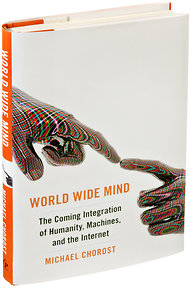

Cultural Memes and The Human Selector
Daniel Dennett's discussion of the "meme" as a cultural equivalent to the "gene" is supposed to be geared towards applying the theory of evolution to other concepts, such as the development of culture. But the problem I see in this model is the conflict between the inherent idea of randomness in evolution, and what seems to me to be an inherent element of design in culture and in cultural memes.

Remote Ready Biology Learning Activities
Remote Ready Biology Learning Activities has 50 remote-ready activities, which work for either your classroom or remote teaching.
What's New? Subscribe to Serendip Studio
A Random Walk
New Topics
-
12 hours 39 min ago
-
1 week 2 days ago
-
1 week 2 days ago
-
1 week 2 days ago
-
1 week 2 days ago
