
Serendip is an independent site partnering with faculty at multiple colleges and universities around the world. Happy exploring!

Reading and Understanding Carl Sagan's "Textbook"
Though I do not typically enjoy science or anything related to it, I enjoyed Sagan's description of how science impacts our lives through the years: improving our means of communication, entertainment, health, etc. I could appreciate the "textbook-like" information that he provides, but that same information that once kept me interested in the book also made me dislike the book so far. He also disregards those who do not praise science as he does, and that left me indifferent about the book.

Scientific Illiteracy
"...the consequences of scientific illiteracy are far more dangerous in our time, than in any that has come before." (p6-7)

Medical Information on the Internet
Medical Information on the Internet
Internet Code of Ethics
Guiding Principles
1. Candor – Sites should clearly indicate who owns the site, what the purpose of the site is, and conflicting interests the site manager might have
2. Honesty – Sites should honestly portray all claims about efficacy, performance, or benefits of products/services
Distancing emotions from something more personal
So I've been thinking about a the 9/11 Report and Henrietta Lacks and comparing their effect on me emotionally and cognitively. When reading the 9/11 Report I felt so distant and like it was something that happened long before my time and that it had no impact on me. The reality is that my town had a view of the Twin Towers and we were a quick 10 minute train trip away from the city. My father was also on a flight to Portugal and my godmother works in Manhattan so its not as if the tragedy of 9/11 didn't influence my life; it did. I think that is the specific reason that when reading the report I felt like it had no effect on me. This contrasted heavily with the story of Henrietta Lacks where I felt connected and more emotionally invested in her story.

Science as a Key to Understanding
In his book Sagan reminds us that science is of vital importance and it is perilous to forget or ignore it. On page 10 he reminds the reader that, “Abandoning science means abandoning more than air conditioning, CD players, hair dryers and fast cars.” He debunks pseudo science by pointing out that pseudo science hypotheses are framed in such a way that they cannot be proved or disproved. But then again, science is also not always about certainties.

running the risk of distraction
Directly relevant to the conversation we had early last week about running the risk of adding unrelated distractions into our papers: see y'day's NYTimes article about Growing Up Digital, Wired for Distraction. Would love to here some testimonies from you all re: the questions raised here about your re-wired brains...
Benefit-"A thing well done; a good or noble deed."-OED
As I am now skeptical of all the words that I read, I looked up the word benefit in the OED and was reminded that benefit is both a noun and a verb. I am used to benefit being used as a verb- "To do good to, to be of advantage or profit to; to improve, help forward."

Remote Ready Biology Learning Activities
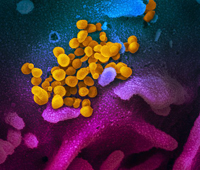
Remote Ready Biology Learning Activities has 50 remote-ready activities, which work for either your classroom or remote teaching.
What's New? Subscribe to Serendip Studio
A Random Walk
New Topics
-
1 day 39 min ago
-
1 week 2 days ago
-
1 week 2 days ago
-
1 week 2 days ago
-
1 week 2 days ago
