
Serendip is an independent site partnering with faculty at multiple colleges and universities around the world. Happy exploring!

Filming Techniques in Tarnation
Watching Tarnation, I felt that a lot of what made the movie was the clever ways in which the director filmed, edited, and spliced the segments of video. For instance, the quick clips of flashing video were used when Jonathan was talking about his drug-induced confusion and disorientation.
I also thought that the choice of music was good in that it contrasted with the images and with the mood of the documentary as a whole. While the music was breathy and cheerful, the videos were anything but cheerful.
I again noticed the discrepancies between different characters descriptions of the same event. As the Netflix summary says , “There's more than one truth on view here.”

Authenticating Truths v. Authentic Truths
I really enjoyed watching Thin Blue Line and found myself rewinding to re-watch portions of it. As I mentioned in class, I've been fascinated by the ways in which something is proven or authenticated as true. In terms of documentary film, there are all sorts of techniques and methods that can be employed. The Thin Blue Line features several, from invoking the psychological past and family damage done to David Harris, to the repetition of the murder scene. Interestingly enough, as we discussed, this film was intentionally crafted by the filmmaker to suggest the innocence of Randall Adams. While a murder is fairly black and white, with someone who is guilty of the killing and someone who is not, the stories or versions of the truth told by those involved varied greatly!

Thin Blue Line
I thoroughly enjoyed watching Thin Blue Line. I enjoyed the repetitious illustration of the events of the night of the murder. Like we discussed in class today, the story left me wary of the judicial system and wondering how many people have gone through that same experience, yet they were never proven innocent. Subsequently, I looked up a list of exonerated death row inmates and it saddens me that years of these people's lives were stolen and they will more than likely never be the same.
Class Notes 10/26
Class Notes 10/26/10
Anne: Discussion of what to do on Thursday. People willing to serve as mediators in her absence. This would be a step towards self-directed education. Reactions?
Veritatemdelixi: Suggested working together on papers.
Anne: We wouldn’t be able to discuss film.
Aya Seaver: We could discuss film and then do writing groups.

Tarnation
I'm still watching the movie but I thought I would post some initial reactions. The introduction portion of the movie is one of the creepiest things I've watched in a long time. Since this portion is also one of the parts of the movie that really is a creation of art rather than a documentary, I think its really interesting that the creators of the film chose to introduce the movie in this way. Flashing images of people and playing eerie music sets up the film as a kind of real life horror story. I'd be really interested in knowing how much of this documentary was part of Jonathan Caouette's initial idea for the film and which parts were added as a result of input from other directors.

A Side-Step to Literary Theory
“It could be that we always need more stories because in some way they do not satisfy. Stories, however perfectly conceieved and powerfully written, however moving, do not accomplish successfully their allotted function. Each story and each repetition or variation of it leaves some uncertainty or co tains some loose end unraveling its effect, according to an implacable law that is not so much psychological or social as linguistic. This necessary incompletion means that no story fulfills perfectly once and for all its functions of ordering and confirming.

Multilayered Perspectives, Memory, and the Thin Blue Line
To return to a topic we discussed in last week's class about the idea of perspective, I want to focus this post on the idea that a multilayered perspective is more representative of "reality" than a singular narrative presence. Many people in the class felt that they had difficulty following the plot of F for Fake because of the incongruously layered and spliced approach to storytelling. Thin Blue Line used the same technique of multiple perspectives, but did so in a deliberate and almost heavy handed way.
Watching F for Fake
When I was watching F is for Fake I found that it was confusing to pick apart the story. There were all these people that were supposed to be connected to one another in some way (including Orson Welles own story) and I didn’t see the connection. At some point in the movie, the painter “a fake faker” which was hard to process before the next scene came up.
I do watch reality TV for entertainment but while this mock-documentary used similar camera angles/shifts, the plot/story was not made clear to the viewers.

F for Fake/ Thin Blue Line
F for Fake, for me, was disorienting-- but in a fun, roller coaster kind of way. (Wait until we watch Tarnation. THAT is... yeah.) The editing style, at the time, was experimental and as Pamela noted, evocative of the MTV style editing we see today. I appreciated Welles's playfulness with the medium and I did not expect to find a cohesive narrative-- I was, at times, invested in what was "true" and what was "false," but I guess I didn't feel as betrayed or as angry as some of the other opinions we heard last week.


Remote Ready Biology Learning Activities
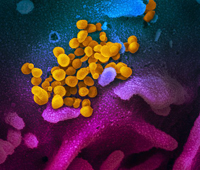
Remote Ready Biology Learning Activities has 50 remote-ready activities, which work for either your classroom or remote teaching.
What's New? Subscribe to Serendip Studio
A Random Walk
New Topics
-
31 min 48 sec ago
-
36 min 45 sec ago
-
1 day 2 hours ago
-
1 week 2 days ago
-
1 week 2 days ago
