
Serendip is an independent site partnering with faculty at multiple colleges and universities around the world. Happy exploring!
Reply to comment
Ecosystem Services – How Some Wild Animals Protect Human Health
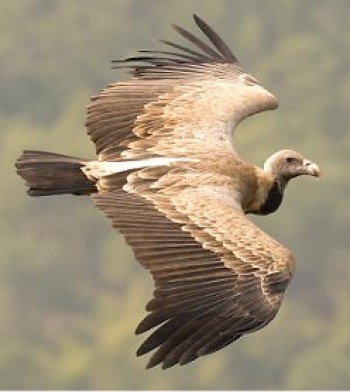
In this minds-on activity, students are introduced to the concept of ecosystem services. Then, students analyze two examples that illustrate how some wild animals protect human health.
First, students learn how the widespread use of a veterinary drug poisoned vultures in India. This increased the populations of rats and feral dogs, which caused an increase in human mortality due to rabies and other infections.
Second, students analyze how a human-spread fungal infection killed millions of North American hibernating bats. The loss of insect-eating bats caused farmers to increase their use of insecticides, which led to increased infant mortality.
I have prepared two versions of the Student Handout. The more complete version will be suitable for most high school students, and the simpler version will be suitable for most middle school students and English language learners in high school.
The first two attached files have the more complete version of the Student Handout. The third and fourth attached files have the simpler version of the Student Handout. The fifth and sixth attached files have the Teacher Notes for this activity. The Teacher Notes provide background information and instructional suggestions and explain how this activity is aligned with the Next Generation Science Standards. The final attached file has the PowerPoint.
| Attachment | Size |
|---|---|
| ecological disturbance SH.docx | 3.55 MB |
| ecological disturbance SH.pdf | 683.27 KB |
| ecological disturbance SH simpler.docx | 3.14 MB |
| ecological disturbance SH simpler.pdf | 4.28 MB |
| ecological disturbance TN.docx | 1.69 MB |
| ecological disturbance TN.pdf | 728.45 KB |
| Figures for.pptx | 6.57 MB |

Reply
Remote Ready Biology Learning Activities
Remote Ready Biology Learning Activities has 50 remote-ready activities, which work for either your classroom or remote teaching.
What's New? Subscribe to Serendip Studio
A Random Walk
New Topics
-
2 days 8 hours ago
-
2 days 8 hours ago
-
2 days 8 hours ago
-
2 days 8 hours ago
-
5 days 7 hours ago
