
Serendip is an independent site partnering with faculty at multiple colleges and universities around the world. Happy exploring!

Teaching Conceiving Ada
When teaching Conceiving Ada, one might want to consider the ways in which reading the information or "data streams" that are transfered and the most effective ways to draw those meanings from the movie. Focusing on specific scenes in the movie are rather futile as the movie challenges the ways in which typical narration is presented in film. In order to understand the movie, it is most effective to practice the distant reading Hayles described.
Technology and Warfare
The technological advances in the area of warfare has changed the dynamics of war. The tools used to fight in war have improved, and because of this, the relationship between violence and power has changed. Advances in war weaponry made the task of killing easier, as the ability to exterminate hundreds of people in seconds has become a reality of war. In fact, the great World Wars would not have been successful at extinguishing so many human lives without the aid of technology. Although advances in war weaponry has improved the effectiveness of war, the need to kill has been exacerbated, and that can never be a good thing. Also, the ability for common citizens to obtain firearms has contributed to hundreds of accidental deaths in America every day, many of them young children.

"Conceiving Ada" Group 8 Notes
(I worked with Oak and shin1068111)
1. What was your response to the film?
- we agreed, none of us particularly liked it
- did not accurately describe computer science: there were too many strange Greek characters
- hard to follow, with a lot of what seemed like irrelevant information
2. What questions does the film raise for you?
- Are information waves real?
- How did Emmy conceive/ give birth to "Ada?"
- Did this accurately describe Ada's personality and her relationship with others? (specifically men)
- What condition/disease did Ada have?
3. How can you place it within the frame of this course? How does it illustrate-or-challenge some of the ideas we have been exploring?

My personality in the panel
I want to perform the personality of the Islamic scholar Ibn Sina ( Avicenna)
What was that movie?!
So, due to a wonderful illness I have not been in class this week and managed to miss the discussion on Conceiving Ada. I watched the film and seemed to understand what happened, but never quite knew why. I get that the main character is trying to connect with Ada through vitual space, but I am not sure why there has to be a chronological narrative. If this woman can make a connection with a historical figure at a specific moment in time why can she not go back to that moment again? Why can she only connect with Ada at moments that happened chronologically after their last discussion?
World Wide Web
Since its creation by Tim Berners-Lee in the early 1990s, the World Wide Web has shaped the way our society works. This technology has enabled us to communicate in ways that were previously unimaginable. We no longer need to mail letters, as we can now easily send an email. Receiving mail is also becoming unnecessary, since something like bank statements can now be read on the Web. Other forms of communicating, like instant messaging and social networks have enabled us to form more connections with different people. Through the use of search engines like Google, we can search for information on a topic and find a relevant website in barely seconds.

Hyper Reading - What's harder?
In Hayes' article "How We Read: Close, Hyper, Machine", there is much discussion of two points that seem contradictory to me:

Forgiving "Ada"
This week, I was the first to admit that the film "Conceiving Ada" didn't really do it for me. I was quick to judge its clunky technology, unrealistic elements, and unconventional protagonist. When Anne pushed my discussion group to go beyond these surface reactions and think about how we might "forget meaning" and see what extensions we can learn from such a film, I was resistant. I thought, "There's nothing to learn if it's all fake and impossible." But when I posted about my panel character for next week, I saw startling similarities between my beloved "Fringe" and this movie that had rubbed me the wrong way. They both deal in impossible technologies, sharing a focus on finding or extracting information that seems lost forever.

Communication Technology
When I think of historical and contemporary examples of technology that have significantly impacted the human race, the first things that come to mind are computers, cell phones, mp3 players, cameras, radios, cars, and airplanes. While looking at this list I noticed an interesting pattern. Most of these “pieces” of technology somehow directly relate to the idea of communication. Human beings are social creatures, and it is no wonder that our attitudes toward technology reflect this.

Remote Ready Biology Learning Activities
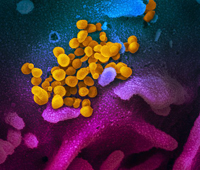
Remote Ready Biology Learning Activities has 50 remote-ready activities, which work for either your classroom or remote teaching.
What's New? Subscribe to Serendip Studio
A Random Walk
New Topics
-
10 hours 39 min ago
-
1 week 2 days ago
-
1 week 2 days ago
-
1 week 2 days ago
-
1 week 2 days ago
