
Serendip is an independent site partnering with faculty at multiple colleges and universities around the world. Happy exploring!

Interpreting GIST & Ada/ Questioning our Survival
So this week I'm supposed to post information about the historical or contemporary difference(s) technology makes. Well…. This week’s discussion of Conceiving Ada was interesting. I was pleasantly surprised that the class picked up on different aspects of the movie. Our minds are trained to think in such various ways that I do not why I’m surprised when people don’t think like me and vice versa. It’s funny how some of us had expectations based on what we wanted to see versus being open to interpreting the movie entirely, whether based on our training our academic expertise or not.


Teaching evolution evolutionarily
In continuing to explore other folks’ papers for The Story of Evolution and the Evolution of Stories, I stumbled across bee27’s webpaper, which (much like my paper) talks about how Darwin’s model of evolution can apply to education. bee27 writes:
“Freire complements Darwin's ideas of breaking free of the educational mold, suggesting a shifted focus to viewing our children as students, and as participants in their own education, and not merely inactive vessels for other people's knowledge. Through On the Origin of the Species, Darwin's radical and therefore extremely significant ideas are like a call to action for science education.”


Randomness versus an Algorithm with a Random Step (... one in the same?)
I have spent the last two weeks trying to convince myself that an algorithm with a random step produces a different outcome than pure randomness does. However, after much thought I am only partly satisfied with the explanation I have generated, and thus am seeking further clarification. In the most basic sense, to me randomness implies that any outcome can occur. Think of a board (like a checkerboard) where a space may either be colored red or black. If the coloring was random any pattern could emerge, it could be all black or red, it could be checkerboard, or it could have no distinguished pattern at all.

post for 02/25
Technology has shaped human life in various ways; people can travel faster, live longer, learn more effectively, etc. What I think is the most important difference that technology makes is increasing the availability of various resources, which gives humans a number of choices when making a decision; couple of examples related to gender and information that are discussed in the class evidently show such phenomena.
Maybe I can't be held be held responsible for my actions in a court of law (or at least Dennett says as much)
According to Dennett, our actions are all results of outside forces, and, as we discussed in class today, that takes agency away from us. I don't buy into this. Yes, I think outside forces determine our emotional responses, but I don't think they determine our behavioral responses. There is a degree of randomness in our behavioral actions in that they are not direct results of contingencies set up by our environments. For example, say that one kid pushes another down on the playground.

Memes and sleep
Dennett caught my attention when he discussed what we as humans saw as the point of life. A life of exploring, learning new things is not exactly the way Mother Nature sees it. Instead he mentions that, "a life of sleep is as good a life as any other and in many regards better --- certainly cheaper --- than most (p.340). Now that I believe is a great motto to live by considering the lack of attention many of my peers seem to pay to the subject of sleep. Wouldn't be interesting if our bodies worked similarly to bears and other mammals that hibernate all winter? Now that would be an interesting experiment, could we sleep through winter? what kinds of changes would our bodies go through?


Remote Ready Biology Learning Activities
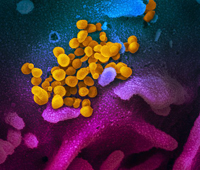
Remote Ready Biology Learning Activities has 50 remote-ready activities, which work for either your classroom or remote teaching.
What's New? Subscribe to Serendip Studio
A Random Walk
New Topics
-
10 hours 39 min ago
-
1 week 2 days ago
-
1 week 2 days ago
-
1 week 2 days ago
-
1 week 2 days ago
