
Serendip is an independent site partnering with faculty at multiple colleges and universities around the world. Happy exploring!


Lifting the Branch
My tree
tells me I have got you, apple.
Now hand to branch
to yes, take my trunk.
Yell oh,
here, like hair like feathers like leaves!
Will the rustling leaves
of the swaying tree
say, no yell, oh?
Adam’s apple,
state the roots, stay the trunk,
and lunging branch.
Branch
out into orchard, think of the leaves.
Yes give us a trunk and another trunk.
Tree
loves its apple
so yellow, yell oh!
We yell over and over oh,
before falling from the branch.
Apple
loves the leaves.
So the tree
is asking touch my trunk.
Tough the bark of the trunk,
still it will yell oh!
Telling, poem ate tree.
Tender it is; the branch
never leaves
apple.
Apple
is alive with trunk.
Leaves
between orange and green and yell oh!
Growing to branch.
This is what it’s like making love with a tree.
Ah the apple. Ah the leaves.
Ah the trunk. Ah the branch.
Yell oh! Ah, says the tree.
D/ri/ps
R
e:
W
at
er
’s
M
on
ol
go
ue
T
hi
s
is
th
e
ch
ar
ac
te
r
of
w
at
er
w
an
ti
ng
in
si
de
th
e
tr
ee
w
he
re
ap
pl
es
ar
e
ha
pp
en
in
g.
Feminist Sting
What felt wrong last night, was the need to explain my fear,
to justify my fear,
to force my fear onto you?
Into you,
I want to pour,
to open, to offer only good things.
But sometimes the asymmetry hurts.
Found Introduction
The great St Mark’s Cathedral in Venice,
the dome radially symmetrical,
each quadrant meets
one of the four spandrels.
Below the dome,
spandrels tapering triangular spaces.
Two rounded arches at right angles are
byproducts of mounting a dome.
Spandrel, a design fitted into its space,
sits in the parts flanked
by the heavenly.
Below a man,
representing one of the four biblical rivers
Tigris,
Euphrates,
Indus,
Nile,
pours water
from a pitcher in the narrowing space.
Below his feet
is elaborate. That we to view it
as sense of the surrounding
necessary spandrels.
They a space which the mosaicists worked.
They set the symmetry
such abound.
We do not impose our biological biases upon them,
a series.

Bryn Mawr College's TIDES Project featured in Association of American Colleges and Universities
Bryn Mawr College's TIDES Project (Teaching to Increase Diversity and Equity in STEM initiative) is featured in the new issue of AAC&U, Diversity & Democracy on Gender Equity in Higher Education, Spring 2015, Vol. 18, No. 2.
"This iss ue of Diversity & Democracy extends AAC&U's longstanding commitment to addressing gender-based inequities in higher education. Article topics include gender equity among STEM students and faculty, women's leadership in areas such as higher education administration, the role of women's colleges and universities worldwide, and the importance of creating campuses that are safe and inclusive for students of all gender identities."
In Women in Computing: The Imperative of Critical Pedagogical Reform, the "Key to sustaining US global competitiveness is the country's ability to harness the kinds of diverse perspectives that not only are known to fuel better scientific outcomes, but also are associated with the inclusion of underrepresented groups, particularly women and women of color."
Kelly Mack and Melissa Soto, Association of American Colleges and Universities; Lilliam Casillas-Martinez, University of Puerto Rico–Humacao; and Elizabeth F. McCormack, Bryn Mawr College
BlendLAC 2015 Materials - Now Available!
The wait is over! Visit Bryn Mawr College's repository to view recordings of presentations and slides from presenters. Click here to go to the page. Read the post below for a recap of the conference.

Remote Ready Biology Learning Activities
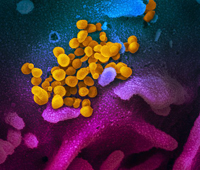
Remote Ready Biology Learning Activities has 50 remote-ready activities, which work for either your classroom or remote teaching.
What's New? Subscribe to Serendip Studio
A Random Walk
New Topics
-
2 days 16 hours ago
-
2 days 16 hours ago
-
2 days 16 hours ago
-
2 days 16 hours ago
-
5 days 15 hours ago
