Serendip is an independent site partnering with faculty at multiple colleges and universities around the world. Happy exploring!

Judith Lucas-Odom's picture

What We Have Done!

This was an exciting year for inquiry.  My students and I took what we learned this summer and included it from the first day of school.  My students became out of the box thinkers and they were able to look at old ideas in new ways.

alesnick's picture

Agency Journal Compilation and Reflection

Hallie Garrison

Empowering Learners


This student reflects on the entires she wrote in her agency journal for the Empowering Learners course.

alesnick's picture

Applying for Success

See video

Hallie Garrison

Empowering Learners


 As the subtitle of this essay says, "Can college students effectively navigate the intricacies of mentoring high-risk youth?


See video
alesnick's picture

Dialogue—Communicating Disapproval with Students: A Spin-Off Piece in Response to On Becoming an Effective Praiser

Amanda Fernandez

Empowering Learners


Fernandez shows deep thinking in her piece about how to appropriately convey disapproval to students.

alesnick's picture

Cross-Cultural Connections in the ESL Classroom: Forging Respect and Shattering Societal Barriers

Riley Diffenderfer

Empowering Learners


 The author responds to an earlier paper in this handbook, focused on transcending cross-cultural barriers in mentorship and teaching.

leamirella's picture

An Ethnography: The ‘Talking Head’ Video as a Form of Text

An Ethnography: The ‘Talking Head’ Video as a Form of Text


This paper builds upon my last paper for this class ‘My Experiment’ which took the form of a glog-and-video combination that tested out how my own personal learning as well as the learning of my audience is affected by the medium through which I presented my paper. Conversations were sparked after I published this paper to the class’ Serendip site and this paper is part, my own ‘lived experience’ and observations of user behaviours and part analysis of processing and learning from the ‘talking head’ videos that have grown in popularity over the video-sharing website, YouTube.

Oak's picture

Reading Like a Computer

This is an analysis of a project I did for my class Intro to Data Structures. This analysis is supposed to examine the ways in which computer reading and processing of information is different from human reading and processing of information.

I will be examining three components of the game: the game file I created, which contains simply formatted information about the different aspects of the particular game; the game engine, which takes information out of any game file, processes it, and presents it as a game; and the way the game presents itself to and is used by the player. I have included Wordles of each of these components, as well as sample screenshots of the text, in order to help the reader understand them.

The Wordle of the game file:

How do organisms use energy?

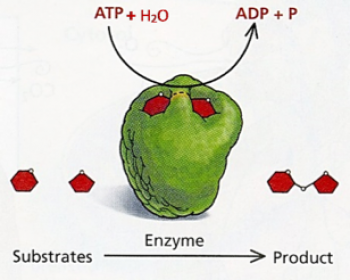
Enzymes convert substrates to product

This analysis and discussion activity introduces students to the basic principles of how organisms use energy.

Students learn that, in cellular respiration, glucose is one input for reactions that provide the energy to make ATP. The hydrolysis of ATP provides the energy for many cellular processes.

Students apply the principles of conservation of energy and conservation of matter to avoid common errors and correct common misconceptions.

The Student Handout is available in the first two attached files and as a Google doc designed for use in distance learning and online instruction. The Teacher Notes, available in the last two attached files, provide instructional suggestions and background information and explain how this activity is aligned with the Next Generation Science Standards.

Syndicate content