
Serendip is an independent site partnering with faculty at multiple colleges and universities around the world. Happy exploring!

Teknolust Observations
Here are three critical observations that Marina, Apo, Kathryn and I made:
1. Ruby ends up with Sandy, whose job is to make copies but he makes them intentionally imperfect
2. There were both virtual and physical viruses. Before Ruby slept with the men that she slept with, their computers would crash which was a contraction of a virtual virus which was later echoed by the manifestation of the barcode rash and impotence which was a physical virus.
3. Discussion of Patenting Life. The professor urged Rosetta to patent her clone theory and Rosetta responds with "How do you patent life?"
Riki and Cara and Merlin - Teknolust
Ruby wanted to become human and she formed attachments with men even though she wasn't supposed to. But Rosetta stone also became more human herself. There is a theme here which seems to suggest a reliance on men.
It seems like there would in reality be a better way for the cyborgs to get the proteins they needed to survive. Why did Rosetta stone make it have to be that way. What is the relevance between the death of her family and the virus?
The different colored rooms were strange.They seemed to spend a lot of time in the blue or green room. Why did she choose those particular colors of the film and what do those colors represent? For example, red = sexual scenes..

Observations of Teknolust
Sadie, Susanna, Kate
Observations:
- Costume choices (for the clones/Tilda)
- Emasculation and commodification of male characters (reverse? sexism; if the genders were reversed, it would be so inappropriate)
- Sex as currency (condoms for donuts)

Ekthorp, Shin1068111, and Hillary G
In our group of 3 (ekthorp, shin1068111, and Hillary G), we discussed the following ideas as being the most interesting observations:
- How the virus infected the men and their computers at the same time
- The unique use of colors, and how mostly primary (but also some secondary) colors were used
- The fragmentation of the scientist into 3 different parts (how each self had a different personality, yet they were all her). Also how sexuality and intimacy was represented in her clones vs. in her "real" life.

Observations on Teknolust
From m.aghazarian, phreNIC, J.Yoo:
- How much did Rosetta influence their personalities? Frankenstein influenced by society, they are influenced by Rosetta
- Rosetta asserts authority because she created them. Children vs. creation(s). Does she have ownership of them?
- "Born with wills of their own"--so what would have happened if they ended up being used labor? Rebellion? Is free will relevant when your choices are limited?

aybala50, kelliott, jlebouvier class post
1) The SRA's both inject and drink human sperm
2) They have the power to completely change the stock market with the wave of their hand
3) Human men are infected by a computer virus after sexual contact with SRA, resulting in a barcode on their forehead
Cyborgs and Disability Studies
I've been trying to think about Haraway's cyborg and the idea of someone with a disability augmenting that disability with technology (i.e. wheelchair, cochlear implants, medication, etc) and becoming a cyborg.
This is problematic, I think, because I've been reading a book by Tobin Siebers called "Disability Theory" in which he addresses this idea of a disabled cyborg. But, he writes, a disabled cyborg is no longer seen as disabled.
Once someone has taken technology in order to address their disability, that disability is supposed to be of no consequence--they have corrected it--even though the individual is still disabled. What kinds of implications does this have this have for cyborg theory, technology usage, and disability studies?
The Dangers of Integrating Mind and Internet
While our class was talking to Michael Chorost yesterday, I was struck by what seemed to me a glaring flaw in his plan to integrate human minds with the Internet. Fusing a brain and a microchip is one thing (which has a specific function that only affects you), but connecting your mind to other peoples’ minds could have all sorts of ominous implications. It seems obvious to me that the most dangerous of these problems is the possibility of a virus or hacker infecting the mind as it would an online website.


Remote Ready Biology Learning Activities
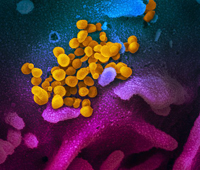
Remote Ready Biology Learning Activities has 50 remote-ready activities, which work for either your classroom or remote teaching.
What's New? Subscribe to Serendip Studio
A Random Walk
New Topics
-
3 hours 16 min ago
-
1 week 1 day ago
-
1 week 1 day ago
-
1 week 1 day ago
-
1 week 1 day ago
