
Serendip is an independent site partnering with faculty at multiple colleges and universities around the world. Happy exploring!


Adaptation
After watching this film Adaptation which starring Nicholas Cage and Meryl Streep, a certain line resonated with me and really helped me connect it to our class, along with the Darwin references and one liners about adaptation and evolution of course. Charlie explains writing in one scene of the film and I thought it made so much sense in terms of what we have talked about in our own writing experiences as well as when talking about Power's Generosity. In this scene Charlie explains to his brother Donald, an aspiring screen writer who is taking a "how to" class, what it means to write. He says (not word for word),

Thoughts Inspired by Class with Chorost
Immediately following our very interesting class yesterday I went to hear sociologist Jim House give a talk about health care reform in the US. House’s basic argument was that a person’s socio economic status is the most important factor in determining their health. He posited that we need to look at how we can ameliorate factors that make people sick rather than focus on the health care system itself. The idea is that if we have healthy people the demand for health care won’t be as great.

stories we tell others, stories we tell ourselves
While watching an episode of the television show “Community” over the weekend, there was a portion of the episode that reminded me of concepts we are talking about in this class. Here is the link to the scene, just watch the first minute: http://www.youtube.com/watch?v=gUI4klkNMOs Jeff, the main character, is having a conversation with his friend Abed, who is an “unusual” person. Abed is trying to be more “normal”, but Jeff tells Abed that there is no such thing as normal, and there is no “right” way to act. In fact, Jeff tells Abed that the way we act is just lying to others, and that much of the lying we do is actually to ourselves. This struck me as an interesting concept, and how we

Intentional Flatness
A recurring complaint that we (my section, at least) seem to have is that the characters in the novels we have read are too "flat". By "flat", we mean - or, at least, I think we mean - that the characters display a limited range of emotions, and I personally define "flatness" as a lack of both inner and outer conflict in addition to no observable personality. I thought that the characters in Generosity were flat, particularly because I felt that the author was faking his understanding of them, but I don't really agree with the general opinion that the characters in The Plague are flat.
Not Quite a Journal
On Thursday, in Professor Grobstein's section, we spent a nice amount of time discussing the difference between private journaling and the tendency of people to post their journals online - for example, we talked about the ways in which Facebook or Livejournal have come to function as online, public journals for many people. I've been thinking about it, though, and I disagree; we concluded that Facebook/Livejournal/etc. have essentially replaced the private, paper journal, but I'm not certain that these things are comparable at all. We had considered the changing boundary between that which is public and that which is private, but I think that the difference between Livejournal and a traditional journal is more significant than the public/private dichotomy.


Impact of Justice
In Professor Dalke’s section on Thursday, we discussed the difference between generosity and justice. The concept of generosity includes the idea of string-less gifts. Justice, on the other hand, requires accommodation to address inequality. In my belief, I think that an individual or a system should be rational and emotional when dealing with justice. I don’t think that justice should be witless or algorithmic, as also discussed in class. Justice can’t both be algorithmic and emotional, which are opposing ideas in this sense. We talked about various scenarios and how to form a perfectly just classroom or environment. I don’t think that pure justice can be plausible in a given situation because it is likely that at least one person would not find some aspect unfair.

Remote Ready Biology Learning Activities
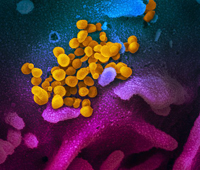
Remote Ready Biology Learning Activities has 50 remote-ready activities, which work for either your classroom or remote teaching.
What's New? Subscribe to Serendip Studio
A Random Walk
New Topics
-
3 hours 49 min ago
-
1 week 2 days ago
-
1 week 2 days ago
-
1 week 2 days ago
-
1 week 2 days ago
