
Serendip is an independent site partnering with faculty at multiple colleges and universities around the world. Happy exploring!

Class Notes 4/6
More feminist readings of Frankenstein
--suggest that you could look at Safie’s letter as core of book
--bodies that discover selves as spirits...his fate is her fate
--no one can see their status as that of rational beings; both spirits that need to be treated as such
--step off of Paradise Lost (a contemporary version)
--Mary Shelley’s husband wrote Prometheus Unbound
--transgression of sexual, psychic, geographic bounds
--belong in category of Romantic, subset=Gothic: some critics say these readings as Gothic flatten the novel..

Frankenstein: A Story of Failed Education
When reading Frankenstein, I became interested in the notion of viewing Frankenstein as a cautionary tale of failed education. Specifically, I wondered if we could consider the Frankenstein creature an example of a failed western education if the Frankenstein creature never had any formal education, but rather was primarily self taught.

Character development in the Plague
The beauty of the Plague is that it creeps up on you in a slow and infectious way. What starts off as just an ordinary, insignificant town can turn into a story that is retold over and over again for years to come. The characters in the Plague show a slow but gradual character development (in contrast to Generosity) that makes sense. The doctor begins as a normal everyday doctor caring for his patients but as the story progresses, the doctor becomes immune to the suffering of his patients. The energetic Rampert desperate to leave the town to return to his love ultimately decides to stay behind with the suffering. Camus builds this gradual character development that pulls me deeper into the story line.

Could it Happen Today?
Time was a central topic in our discussion on Thursday, and is crucial to evolution. Change takes time. Not only is the passage of time important, but so is the point in time and place.
The Algorithm of Plagues - But Not for Justice?
In Anne's discussion group on Thursday we continued discussing/debating whether the plague itself serves as a form of justice, or whether its blindness means that there was no motivation or cause for administering such a punishment. We went back and forth in regards to the true meaning of justice, and if it can just stand on its own or if it needs to be for something (i.e. justice for...). In my opinion, justice is a punishment for actions or behaviors, a form of revenge. If we all agree that the plague itself is blind, or an equalizer due to putting everyone on an equal playing field in terms of death, then can it be a punishment for something/to someone?
Class Notes April 6, 2011: CLOSELY Reading Frankenstein
Course Keeping:
*On Monday, come to class with 3 questions for Mike Chorost
*For Wednesday watch Teknolust. (available streaming on Netflix)
*Class voted to watch TRON over Source Code for accessibility reasons
-$4.99 on iTunes, short wait on Netflix for dvd
Feminist Readings / Critiques of Frankenstein (cont. from Mon):

Beauty and Relativity
What really stuck with in my mind from our discussion on Wednesday is the part where we talked about beauty. Beauty is such an abstract term. What is beauty and who is to decide that?
Frankenstein as a Cautionary Tell About the Dangers of of Binaries
While reading Frankenstein, I noticed that Victor struggled with some of the gender binaries we discussed in class. Victor is a male, yet there is a moment in the text that insinuates an attraction to other men. Although Victor is a man, he has not been told that he should be attracted to only women (by society's conventional standards). This ambiguity in Victor's sexual orientation may be a comment by Mary Shelley as to how much science and society play a part in a how a person relates his gender. Mary Shelley would probably agree with Roughgarden's view on gender and sexuality as a naturally diverse occurrence. Victor is an example of how sexuality is something that is born with a person, and shaped depending on how society interacts with that individual.

Remote Ready Biology Learning Activities
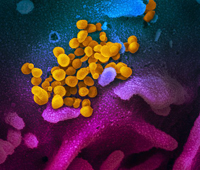
Remote Ready Biology Learning Activities has 50 remote-ready activities, which work for either your classroom or remote teaching.
What's New? Subscribe to Serendip Studio
A Random Walk
New Topics
-
3 hours 50 min ago
-
1 week 2 days ago
-
1 week 2 days ago
-
1 week 2 days ago
-
1 week 2 days ago
