
Serendip is an independent site partnering with faculty at multiple colleges and universities around the world. Happy exploring!

The Epigraph
After our class discussion last week, I kept thinking about how crucial the epigraph seemed to me with regards to how it changed my reading of Camus's work, and how it didn't seem "accurate" in this light that certain editions leave it out.


Why We NEED to Keep Pushing that Rock Uphill
I was reading the latest issue of Psychology Today recently and came across an article about a man who haphazardly fell into ultramarathon running. For those of you who don't know, an ultramarathon is a race anywhere from about 30-100 miles long, and, yes, you run it. A podiatrist who ran two miles "to keep in shape" gradually found himself training for marathons and then graduated into runs lasting from 10 PM to 6 AM in preparation for hundred-mile races.

Is science in a futile fight?
So in my discussion group this past Thursday, we talked about whether or not The Plague was about science trying to overcome an invincible enemy, specifically in this context, the plague. Looking at this time period and the status of science, what could they have possibly done? Extending it to even modern times, should a super-virus/bacteria appear, how would science attempt to stop it? One could even argue that science is the cause of pandemics such as this. By constantly producing anti-bacterial soaps and other substances made to kill off most (but not all) bacteria, those who survive become resistant to that specific type of anti-bacterial and will reproduce to create a new population immune to that.


Remote Ready Biology Learning Activities
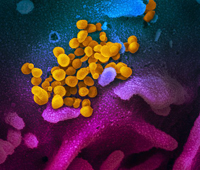
Remote Ready Biology Learning Activities has 50 remote-ready activities, which work for either your classroom or remote teaching.
What's New? Subscribe to Serendip Studio
A Random Walk
New Topics
-
3 hours 50 min ago
-
1 week 2 days ago
-
1 week 2 days ago
-
1 week 2 days ago
-
1 week 2 days ago
