Serendip is an independent site partnering with faculty at multiple colleges and universities around the world. Happy exploring!

How Genes Can Cause Disease - Introduction to Transcription and Translation

Process of transcription and translation

To begin this hands-on, minds-on activity, students learn that different versions of a gene give the instructions for making different versions of a clotting protein, which result in normal blood clotting or hemophilia.

Then, students learn how genes provide the instructions for making a protein via the processes of transcription and translation. They develop an understanding of the roles of RNA polymerase, the base-pairing rules, mRNA, tRNA and ribosomes.

Finally, students use their learning about transcription and translation to understand how a change in a single nucleotide in the hemoglobin gene can result in sickle cell anemia.

Throughout, students use the information in brief explanations, figures and videos to answer analysis and discussion questions. In addition, students use simple paper models to simulate the processes of transcription and translation.

An alternative version omits the paper models (How Genes Can Cause Disease – Understanding Transcription and Translation).

Download Student Handout: PDF format or Word format

DNA

In this hands-on, minds-on activity, students extract DNA from Archaea or from their cheek cells.

In addition, students learn or review key concepts about the structure, function, and replication of DNA. For example, students learn that the genes in DNA give the instructions to make proteins, which influence our characteristics.

They also learn how the double helix structure of DNA and the base-pairing rules provide the basis for DNA replication.

This activity includes multiple analysis and discussion questions and hands-on or online modeling of DNA replication. (NGSS)

 Download Student Handout Archaea: PDF format or Word format

Download Teacher Preparation Notes Archaea: PDF format or Word format

Download Student Handout Cheek Cells: PDF format or Word format

Download Teacher Preparation Notes Cheek Cells: PDF format or Word format

Were the babies switched? – The Genetics of Blood Types and Skin Color

3 babies with different skin color

In this minds-on, hands-on activity, students learn about the genetics of ABO blood types, including multiple alleles of a single gene and codominance. Then, students use chemicals to simulate blood type tests and carry out genetic analyses to determine whether hospital staff accidentally switched two babies born on the same day.

Next, students analyze the genetics of skin color in order to understand how fraternal twins can have different skin colors. In this analysis, students learn about incomplete dominance and how a single phenotypic characteristic can be influenced by multiple genes and the environment. (NGSS)

Download Student Handout: PDF format or Word format

Download Teacher Preparation Notes: PDF format or Word format

Dragon Genetics – Understanding Inheritance

In the simulation activity, Dragon Genetics – Understanding Inheritance, students mimic the processes of meiosis and fertilization to investigate the inheritance of multiple genes and then use their understanding of concepts such as dominant/recessive alleles, incomplete dominance, sex-linked inheritance, and epistasis to interpret the results of the simulation. This activity can be used as a culminating activity after you have introduced classical genetics, and it can serve as formative assessment to identify any areas of confusion that require additional clarification.

Download Student Handout: PDF format or Word format

Summary of Cellular Automata as Explorers

Cellular Automata Findings


Below are measures of how many possible states (one dimensional linear arrangements) a particular rule generates. Results were taken from a 9 cell CA, 11 cell CA, and 19 cell CA. Click images to enlarge.


Dragon Genetics: Independent Assortment and Gene Linkage

Dragon!In the lab, Dragon Genetics: Independent Assortment and Gene Linkage, students learn the principles of independent assortment and gene linkage in activities which analyze inheritance of multiple genes on the same or different chromosomes in hypothetical dragons. Students learn how these principles derive from the behavior of chromosomes during meiosis and fertilization.

Download Student Handout: PDF format or Word format

Genetics

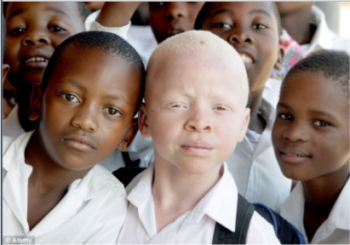
Photo of albino and non-albino children

This hands-on, minds-on activity helps students to understand basic principles of genetics, including (1) how genotype influences phenotype via the effects of genes on protein structure and function and (2) how genes are transmitted from parents to offspring through the processes of meiosis and fertilization.

Students use model chromosomes to demonstrate how meiosis and fertilization are summarized in Punnett squares. In the coin flip activity, students learn about the probabilistic nature of inheritance and Punnett square predictions.

Concepts covered include dominant and recessive alleles, incomplete dominance, and polygenic inheritance. The concepts are reinforced in an optional final review page.

Download Student Handout: PDF format or Word format

Download Teacher Preparation Notes: PDF format or Word format

The Teacher Preparation Notes provide instructional suggestions and background information and explain how this activity is aligned with the Next Generation Science Standards.

Cell Membrane Structure and Function

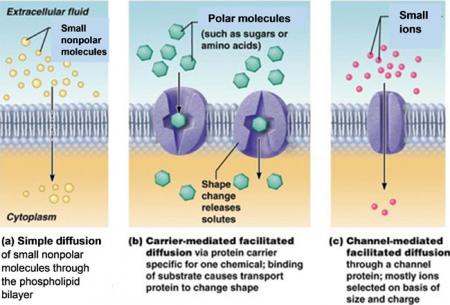
Molecular view of diffusion

This activity includes two hands-on experiments and numerous analysis and discussion questions to help students understand how the characteristics and organization of the molecules in the cell membrane result in the selective permeability of the cell membrane.

In the hands-on experiments, students first evaluate the selective permeability of a synthetic membrane and then observe how a layer of oil can be a barrier to diffusion of an aqueous solution.

Students answer analysis and discussion questions to learn how the phospholipid bilayer and membrane proteins play key roles in the cell membrane function of regulating what gets into and out of the cell. Topics covered include ions, polar and nonpolar molecules; simple diffusion through the phospholipid bilayer; facilitated diffusion through membrane proteins; and active transport by membrane proteins.

An optional additional page introduces exocytosis and endocytosis.

Moldy Jell-O

In the lab, Moldy Jell-O, students design experiments to determine how substrate and environmental conditions influence growth of common molds. Students carry out their experiments, analyze and interpret their evidence, and prepare a report.

Download Student Handout: PDF format or Word format

Download Teacher Preparation Notes: PDF format or Word format

The Story of Evolution and the Evolution of Stories: A Syllabus


The Story of Evolution and the Evolution of Stories:

Exploring the Significance of Diversity
Biology/English 223
Bryn Mawr College
Spring 2009

Anne Dalke (English House, ext. 5308, adalke@brynmawr.edu)
Paul Grobstein (Park Science Building, ext. 5098, pgrobste@brynmawr.edu)

/exchange/courses/evolit/s09/

Syndicate content