Serendip is an independent site partnering with faculty at multiple colleges and universities around the world. Happy exploring!

activities for teaching biology

Mitosis and the Cell Cycle - How a Single Cell Develops into the Trillions of Cells in a Human Body

Cell cycle producing daughter cells

In this hands-on, minds-on activity, students learn how the cell cycle produces genetically identical daughter cells.

They use model chromosomes and answer analysis and discussion questions to learn how DNA replication, mitosis and cytokinesis work together to ensure that each new cell gets a complete set of chromosomes with a complete set of genes. The model chromosomes are labeled with the alleles of several human genes, and students learn how the alleles influence phenotypic characteristics.

To understand how a single cell (the fertilized egg) can develop into the trillions of cells in a human body, students analyze an exponential growth model for the increase in number of cells. The final section provides a brief introduction to cellular differentiation.

This activity can be used as an introduction to the cell cycle and mitosis or to reinforce understanding of these topics.

In our follow-up meiosis and fertilization activity (/sci_edu/waldron/#meiosis) students learn how the movement of gene-carrying chromosomes during meiosis and fertilization results in the inheritance of genes. (NGSS)

Download Student Handout: PDF format or Word format

Photosynthesis Investigation

cell diagramIn the first part of this activity, students learn how to use the floating leaf disk method to measure the rate of net photosynthesis (i.e. the rate of photosynthesis minus the rate of cellular respiration). They use this method to show that net photosynthesis occurs in leaf disks in a solution of sodium bicarbonate, but not in water. Questions guide students in reviewing the relevant biology and analyzing and interpreting their results. In the second part of this activity, student groups develop hypotheses about factors that influence the rate of net photosynthesis, and then each student group designs and carries out an investigation to test the effects of one of these factors. (NGSS)

How do muscles get the energy they need for athletic activity?

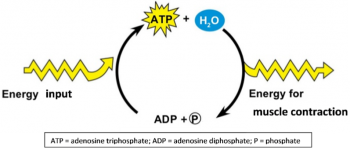
ATP in muscle cells

In this analysis and discussion activity, students learn how muscle cells produce ATP by aerobic cellular respiration, anaerobic fermentation, and hydrolysis of creatine phosphate. Students use their understanding of these three processes to analyze their relative importance when racing different distances.

Students learn how multiple body systems work together to supply the oxygen and glucose needed for aerobic cellular respiration.

Finally, students use what they have learned to analyze how regular aerobic exercise can improve athletic performance.

The Student Handout is available in the first two attached files and as a Google doc designed for use in distance learning and online instruction. The Teacher Notes, available in the last two attached files, provide instructional suggestions and background information and explain how this activity is aligned with the Next Generation Science Standards.


How do food molecules reach our muscles? – Structure and Function of Organ Systems, Organs and Cells

In this activity, students learn (1) how food is digested into smaller molecules and (2) how the digestive and circulatory systems cooperate to bring digested food molecules to muscles all over the body.

Students analyze several examples of the relationship between structure and function in these organ systems.

Finally, students use a claim, evidence, reasoning framework to evaluate the claim that structure is related to function in cells, organs and organ systems.

Two versions of the Student Handout are available – a more complete version (suitable for most high school students) and a simpler version (suitable for most middle school students).

Using Models to Understand Photosynthesis

chloroplast modelIn this analysis and discussion activity, students develop their understanding of photosynthesis by answering questions about three different models of photosynthesis.

These models are a chemical equation, a flowchart that shows changes in energy and matter, and a diagram that shows the basic processes in a chloroplast. Students use a drawing of a plant to create another model of photosynthesis.

Finally, students evaluate the advantages of each type of model for understanding photosynthesis; this helps them to appreciate the role of scientific models.

The Student Handout is available in the first two attached files and as a Google doc designed for use in distance learning and online instruction. (For additional information, see https://serendipstudio.org/exchange/bioactivities/Googledocs, especially item 7.) The Teacher Notes, available in the last two attached files, provide instructional suggestions and background information and explain how this activity is aligned with the Next Generation Science Standards.

Alignment of Activities with Next Generation Science Standards

Most of our activities for helping middle school and high school students learn life sciences are aligned with the Next Generation Science Standards (NGSS; http://www.nextgenscience.org/next-generation-science-standards and http://www.nextgenscience.org/sites/default/files/HS%20LS%20topics%20combined%206.13.13.pdf). The attached tables summarize how our activities help students learn NGSS Disciplinary Core Ideas and meet Performance Expectations. These tables also summarize how each activity engages students in Scientific Practices and provides the opportunity to discuss Crosscutting Concepts. Brief descriptions of these activities are compiled at /exchange/bioactivities/NGSS/listing. The Teacher Notes for each activity provide additional information concerning alignment with the Next Generation Science Standards.

Genetic Engineering Challenge – How can scientists develop a type of rice that could prevent vitamin A deficiency?

Parts of rice diagram

This analysis and discussion activity begins with an introduction to vitamin A deficiency and a review of transcription, translation, and the universal genetic code.

Several questions challenge students to design a basic plan that could produce a genetically engineered rice plant that makes rice grains that contain pro-vitamin A. Subsequent information and questions guide students as they learn how scientists use bacteria to insert desired genes, together with an appropriate promoter, in the DNA of plant cells.

In a final optional section, students evaluate the pro and con arguments in the controversy concerning Golden Rice.

How Eyes Evolved – Analyzing the Evidence

Human eye and octopus eye with lens and retina

This analysis and discussion activity focuses on two questions. How could something as complex as the human eye or the octopus eye have evolved by natural selection? How can scientists learn about the evolution of eyes, given that there is very little fossil evidence?

To answer these questions, students analyze evidence from comparative anatomy, mathematical modeling, and molecular biology. Students interpret this evidence to understand a likely sequence of intermediate steps in the evolution of complex eye and how each intermediate step contributed to increased survival and reproduction.

The Teacher Notes suggest additions to the Student Handout that can be used to introduce concepts such as the role of gene duplication in evolution and/or homology and analogy. 

The Student Handout is available in the first two attached files. The Teacher Notes, available in the last two attached files, provide instructional suggestions and background information and explain how this activity is aligned with the Next Generation Science Standards and the Common Core State Standards.

How Animals Adapt to Their Environments– Examples and Evolution

In this activity, students analyze examples of adaptations, including camouflage, mimicry of an inedible object, and phenotypic plasticity. Phenotypic plasticity means that a single genotype can develop different phenotypes in different environments.

Phenotypic plasticity allows an individual organism to adapt to different environments during its lifetime. Natural selection for an adaptation allows a population of organisms to adapt to different environments over time.

The Student Handout is available in the first two attached files and as a Google doc designed for use in online instruction and distance learning. The Teacher Notes, available in the last attached file, provide instructional suggestions and background information and explain how this activity is aligned with the Next Generation Science Standards. The last attached file is a Powerpoint of the figures so you can show your students the color camouflage.


Understanding and Predicting Changes in Population Size – Exponential and Logistic Population Growth Models vs. Complex Reality

Whooping crane

In this analysis and discussion activity, students develop their understanding of the exponential and logistic population growth models by analyzing the recovery of endangered species and growth of bacterial populations.

Students learn about the processes that cause exponential or logistic population growth, interpret data from several investigations, and apply their understanding to policy questions.

Next, students analyze examples where the trends in population size do not match the predictions of the exponential or logistic population growth models. They learn that models are based on simplifying assumptions and a model’s predictions are only accurate when the simplifying assumptions are true for the population studied.

In the last section, students analyze trends in the number of people on the earth and analyze one of the factors that affect the earth’s carrying capacity for people.

One version of the Student Handout includes mathematical equations, which are omitted from the other version. These versions of the Student Handout will be suitable for most high school students. I have also prepared a simpler Student Handout, which will be suitable for most middle school students.This simpler version is called “Population Growth – Effects of the Environment” (https://serendipstudio.org/exchange/bioactivities/popgr).

Syndicate content